The Evolution of Human Creativity in the Age of AI
Reading Time : 5 min
Social Share :-
The Evolution of Human Creativity in the Age of AI
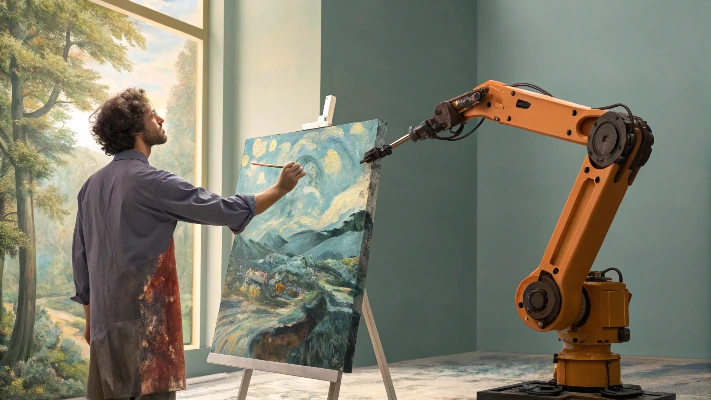
Human creativity—long regarded as an inherently human domain—is undergoing a structural transformation as artificial intelligence becomes an integrated collaborator across artistic and creative disciplines. Rather than replacing creative labor, AI is reshaping workflows, expanding expressive possibilities, and raising new questions about authorship, value, and cultural impact.
From Tool to Creative Partner
Where early computational tools automated repetitive tasks, contemporary AI systems participate actively in ideation and generation. Designers use generative models to explore vast design spaces; composers employ algorithmic companions to suggest harmonies and motifs; writers prototype story arcs with language models. This evolution reframes AI as a partner that accelerates iteration and surfaces novel directions.
Redefining Authorship and Originality
The collaboration between humans and machines challenges established notions of authorship. Creative outcomes that blend human intuition with machine-generated material require new frameworks for attribution, intellectual property, and critical evaluation. Industry and cultural institutions are beginning to adapt standards that recognize composite creative processes.
Democratizing Creative Access
Powerful creative capabilities that were once confined to specialist studios are now broadly accessible. User-friendly AI tools lower barriers to entry for emerging creators, enabling small teams and individuals to produce professional-grade work. This democratization diversifies the creative ecosystem and accelerates experimentation across mediums.
Preserving the Human Core
AI can replicate style and optimize form, but the essential human elements—contextual empathy, lived experience, and emotional nuance—remain central to meaningful expression. The strategic use of AI should therefore emphasize augmentation: preserving human intent and sensibility while leveraging computational strengths for scale and iteration.
Toward Productive Co-Creation
The future of creativity will be defined by hybrid practices that combine human judgment with algorithmic capability. Organizations, educators, and creators who adopt intentional workflows, ethical guidelines, and transparent attribution models will be best positioned to harness AI’s potential while safeguarding cultural and artistic integrity.