
Author name: Shubham Jain

The Science of Flow: Unlocking Peak Performance in Work and Life
Articles

The Science of Flow: Unlocking Peak Performance in Work and Life

Back To Home The Science of Flow: Unlocking Peak Performance in Work and Life Reading Time : 6 min Social Share :- The Science of Flow: Unlocking Peak Performance in Work and Life Flow, often described as being “in the zone,” is a psychological state where focus, creativity, and productivity reach their highest levels. This optimal state of consciousness is now a central subject in performance research, helping professionals, athletes, and creatives achieve greater results with less mental friction. Understanding the Flow State Flow occurs when challenge and skill are perfectly balanced, leading to complete immersion in an activity. Distractions fade, time perception shifts, and actions feel effortless—allowing individuals to operate at their fullest potential. The Neurology Behind Flow Neuroscientific studies reveal that flow is linked to the release of dopamine, norepinephrine, and endorphins, which enhance motivation, learning, and mood. These neurochemical changes boost cognitive performance while reducing mental fatigue. Triggers That Spark Flow Clear goals, immediate feedback, and a focus on meaningful tasks are proven flow triggers. Structuring work and leisure activities around these principles can make peak performance a more regular occurrence rather than a rare event. Flow in Professional and Personal Life In the workplace, flow leads to higher efficiency, innovation, and job satisfaction. Outside of work, it enhances hobbies, sports, and creative pursuits—making daily life richer and more fulfilling. Designing a Flow-Friendly Environment Eliminating unnecessary distractions, aligning tasks with personal strengths, and embracing deep work practices are key to cultivating flow. As more individuals and organizations understand its benefits, flow is becoming a blueprint for high achievement in both personal and professional spheres.


Sustainable Luxury: How Eco-Friendly Design is Changing High-End Fashion
Articles

Sustainable Luxury: How Eco-Friendly Design is Changing High-End Fashion

Back To Home Sustainable Luxury: How Eco-Friendly Design is Changing High-End Fashion Reading Time : 6 min Social Share :- Sustainable Luxury: How Eco-Friendly Design is Changing High-End Fashion The concept of luxury is evolving, with sustainability emerging as a defining characteristic of modern high-end fashion. Designers and brands are increasingly integrating eco-conscious materials, ethical sourcing, and responsible manufacturing into their collections, reshaping the industry’s values and consumer expectations. Redefining Luxury Through Sustainability Today’s discerning consumers seek products that align with both style and conscience. Sustainability is no longer a niche trend—it is a marker of authenticity and innovation, influencing purchasing decisions across global luxury markets. Innovative Materials and Techniques From organic cotton and plant-based leathers to recycled textiles and biodegradable fabrics, the use of sustainable materials is becoming central to luxury design. Advanced production methods minimize waste while maintaining the craftsmanship and quality synonymous with high fashion. Ethics as a Brand Signature Luxury brands are embracing transparency in their supply chains, showcasing their commitment to fair labor practices, environmental stewardship, and reduced carbon footprints. Ethical storytelling is now an integral part of brand identity and consumer trust. Balancing Exclusivity with Responsibility The challenge for luxury houses lies in preserving exclusivity while adopting scalable sustainable practices. Limited-edition releases, artisanal collaborations, and circular fashion initiatives are bridging this gap, offering products that are both rare and responsible. The Future of Sustainable Luxury Eco-friendly design is no longer an optional consideration—it is shaping the very definition of luxury in the 21st century. As innovation in materials and manufacturing continues, sustainable luxury is poised to set new benchmarks for elegance, ethics, and environmental impact.

Digital Storytelling
Articles

Mastering Digital Storytelling for a Global Audience

Back To Home Mastering Digital Storytelling for a Global Audience Reading Time : 6 min Social Share :- Mastering Digital Storytelling for a Global Audience In an era where content crosses borders in seconds, mastering digital storytelling is essential for reaching and resonating with global audiences. Effective storytelling now requires a blend of cultural awareness, multimedia fluency, and strategic platform use to engage diverse demographics across the digital landscape. Understanding Cultural Contexts Global storytelling demands sensitivity to cultural nuances, values, and traditions. Narratives must be adapted—not just translated—to reflect local idioms, symbolism, and perspectives, ensuring authenticity and relevance in every market. Leveraging Multimedia Formats From short-form videos to interactive web experiences, modern storytelling thrives on diverse media formats. Combining text, visuals, audio, and motion graphics creates immersive narratives that appeal to different consumption habits and attention spans. Data-Driven Content Strategies Analytics tools enable creators to understand audience behavior, engagement patterns, and content preferences. By leveraging data, storytellers can refine narratives in real time, optimize distribution, and tailor messaging to specific regions and cultures. Platforms as Story Ecosystems Social media, streaming platforms, and digital communities each have unique storytelling languages. Crafting platform-specific narratives while maintaining a consistent brand voice is key to maximizing reach and impact. The Human Element in a Digital World Even in a data-saturated environment, the most compelling stories remain those that connect emotionally. Successful global storytelling combines technological sophistication with human empathy, bridging geographic and cultural divides through shared experiences.

The Wellness Revolution: Technology’s Role in Mind-Body Health
Articles

The Wellness Revolution: Technology’s Role in Mind-Body Health

Back To Home The Wellness Revolution: Technology’s Role in Mind-Body Health Reading Time : 5 min Social Share :- The Wellness Revolution: Technology’s Role in Mind-Body Health The intersection of wellness and technology is redefining how individuals approach physical, mental, and emotional health. From wearable devices that monitor biometrics to AI-powered mental health platforms, technology is enabling a more proactive, personalized, and holistic approach to well-being. Integrating Health Data into Daily Life Wearable fitness trackers, smart scales, and sleep-monitoring devices provide real-time data that empowers individuals to make informed lifestyle choices. By translating complex physiological metrics into actionable insights, technology helps users stay engaged with their health on a daily basis. Mindfulness in the Digital Age Mobile applications and virtual platforms are making mindfulness practices more accessible than ever. Guided meditations, breathing exercises, and mood tracking tools are helping individuals manage stress, build resilience, and cultivate emotional balance—even in high-pressure environments. AI-Powered Personalization Artificial intelligence is revolutionizing the wellness industry by offering highly customized health recommendations. From adaptive workout plans to nutrition guidance tailored to individual metabolic responses, AI ensures that wellness programs align with unique needs and goals. Bridging Physical and Mental Health Technology is breaking down the silos between mental and physical health care. Integrated platforms now allow for simultaneous tracking of mood, activity levels, and physical symptoms, helping individuals and practitioners address health as an interconnected system. The Future of Tech-Enabled Wellness As innovation continues, the focus will shift from reactive care to preventive and optimized living. The challenge lies in balancing technological convenience with the human elements of empathy, connection, and trust—ensuring that the wellness revolution remains both effective and deeply personal.

Minimalist Living: Designing a Life with Less but Better
Articles

Minimalist Living: Designing a Life with Less but Better

Back To Home Minimalist Living: Designing a Life with Less but Better Reading Time : 5 min Social Share :- Minimalist Living: Designing a Life with Less but Better Minimalist living is more than an aesthetic choice—it is a deliberate lifestyle shift that prioritizes quality over quantity, clarity over clutter, and intentionality over impulse. By focusing on what truly matters, individuals can create spaces, routines, and mindsets that foster both simplicity and fulfillment. The Philosophy Behind Minimalism At its core, minimalism challenges the assumption that more possessions equate to greater happiness. Instead, it encourages a thoughtful curation of belongings, experiences, and commitments, aligning life choices with personal values rather than societal pressures. Designing Spaces with Purpose Minimalist design favors clean lines, functional layouts, and neutral palettes that reduce visual noise and promote calm. Every item serves a purpose—either functional, emotional, or aesthetic—eliminating the excess that distracts from daily life. The Benefits of Living with Less Adopting a minimalist approach can lead to reduced stress, greater financial freedom, and more time for meaningful pursuits. Fewer possessions mean less maintenance, less decision fatigue, and a greater focus on relationships, health, and personal growth. Practical Steps Toward Minimalism Transitioning to a minimalist lifestyle often begins with decluttering—removing unused items, digitizing documents, and streamlining daily routines. Over time, decision-making becomes more intentional, with each new purchase or commitment evaluated for its long-term value. A Life of Intentional Abundance Minimalism is not about deprivation—it is about making space for what enriches life the most. By choosing less but better, individuals can craft a lifestyle that feels both lighter and more deeply fulfilling, proving that simplicity can be the ultimate luxury.

The Evolution of Human Creativity in the Age of AI
Articles

The Evolution of Human Creativity in the Age of AI

Back To Home The Evolution of Human Creativity in the Age of AI Reading Time : 5 min Social Share :-   The Evolution of Human Creativity in the Age of AI   Human creativity—long regarded as an inherently human domain—is undergoing a structural transformation as artificial intelligence becomes an integrated collaborator across artistic and creative disciplines. Rather than replacing creative labor, AI is reshaping workflows, expanding expressive possibilities, and raising new questions about authorship, value, and cultural impact. From Tool to Creative Partner   Where early computational tools automated repetitive tasks, contemporary AI systems participate actively in ideation and generation. Designers use generative models to explore vast design spaces; composers employ algorithmic companions to suggest harmonies and motifs; writers prototype story arcs with language models. This evolution reframes AI as a partner that accelerates iteration and surfaces novel directions. Redefining Authorship and Originality   The collaboration between humans and machines challenges established notions of authorship. Creative outcomes that blend human intuition with machine-generated material require new frameworks for attribution, intellectual property, and critical evaluation. Industry and cultural institutions are beginning to adapt standards that recognize composite creative processes. Democratizing Creative Access   Powerful creative capabilities that were once confined to specialist studios are now broadly accessible. User-friendly AI tools lower barriers to entry for emerging creators, enabling small teams and individuals to produce professional-grade work. This democratization diversifies the creative ecosystem and accelerates experimentation across mediums. Preserving the Human Core   AI can replicate style and optimize form, but the essential human elements—contextual empathy, lived experience, and emotional nuance—remain central to meaningful expression. The strategic use of AI should therefore emphasize augmentation: preserving human intent and sensibility while leveraging computational strengths for scale and iteration. Toward Productive Co-Creation   The future of creativity will be defined by hybrid practices that combine human judgment with algorithmic capability. Organizations, educators, and creators who adopt intentional workflows, ethical guidelines, and transparent attribution models will be best positioned to harness AI’s potential while safeguarding cultural and artistic integrity.

Trump Imposes 100% Tariff on Foreign Semiconductors with U.S. Investment Exemptions
News

Trump Imposes 100% Tariff on Foreign Semiconductors with U.S. Investment Exemptions

Back To Home Trump Imposes 100% Tariff on Foreign Semiconductors with U.S. Investment Exemptions Social Share :- Trump Imposes 100% Tariff on Foreign Semiconductors with U.S. Investment Exemptions Former U.S. President Donald Trump has announced a sweeping 100% tariff on foreign-made semiconductors, a move aimed at boosting domestic manufacturing and reducing reliance on overseas supply chains. The policy includes exemptions for companies that maintain significant manufacturing or investment operations within the United States. Targeting Supply Chain Dependence The tariff is designed to address what Trump describes as a “critical national security vulnerability” stemming from heavy dependence on foreign chip production. By raising import costs, the administration seeks to incentivize semiconductor manufacturing within U.S. borders and strengthen the nation’s technological self-reliance. Exemptions for U.S.-Invested Firms Companies with substantial manufacturing facilities, research operations, or capital investments in the U.S. will be eligible for tariff exemptions. This measure is intended to reward firms that contribute to domestic production capacity while encouraging others to expand operations stateside. Industry and Market Reactions The announcement has sparked mixed reactions from industry leaders. While some view the move as a catalyst for reshoring high-tech manufacturing, others warn it could lead to higher consumer costs and disrupt global supply networks. Semiconductor stocks experienced volatility following the policy statement. Geopolitical and Economic Implications The tariff is expected to intensify trade tensions with major chip-producing nations, particularly in Asia. Analysts suggest that the policy could influence global investment strategies, with multinational firms reassessing supply chain configurations to navigate the U.S. market under the new rules.

Trump’s
News

Viral Hoax: ‘The Simpsons Predicted Trump’s Death’ Debunked

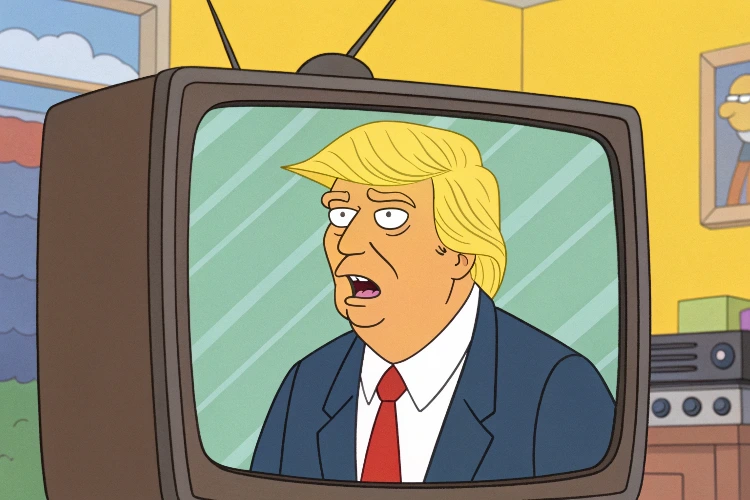
Back To Home Viral Hoax: ‘The Simpsons Predicted Trump’s Death’ Debunked Social Share :- Viral Hoax: ‘The Simpsons Predicted Trump’s Death’ Debunked A viral claim circulating on social media alleging that the animated series The Simpsons predicted the death of former U.S. President Donald Trump has been proven false. Fact-checkers confirm that no such episode exists, and the images and clips being shared are digitally altered or taken out of context. Origins of the Misinformation The rumor appears to have originated from edited fan art and manipulated screenshots designed to mimic the animation style of The Simpsons. These doctored visuals were then shared widely across platforms, sparking speculation and reinforcing the long-running myth that the show has an uncanny ability to foresee future events. Why the Hoax Spread Quickly The Simpsons’ reputation for accurately depicting real-world events—often years in advance—has made such claims more believable to the public. This, combined with political polarization and the viral nature of shocking headlines, allowed the false story to gain traction online in a short period of time. Official Statements and Fact-Checks Representatives for the show, along with independent fact-checking organizations, have confirmed that no episode or official content features the alleged scene. The creators have reiterated that while the series often satirizes politics, it does not engage in creating such depictions for predictive purposes. The Broader Impact of Fake Media This incident highlights the growing challenge of combating misinformation in the digital age. As AI-generated content and image manipulation tools become more sophisticated, verifying the authenticity of online media is becoming increasingly important for audiences and news outlets alike.

News

U.S. Job Market Shows ‘No-Hire No-Fire’ Stability

Back To Home U.S. Job Market Shows ‘No-Hire No-Fire’ Stability Social Share :- U.S. Job Market Shows ‘No-Hire No-Fire’ Stability The U.S. labor market is showing signs of rare stability, as employers maintain their current workforce levels amid economic uncertainty. This “no-hire no-fire” trend reflects a cautious approach, with companies avoiding both aggressive recruitment and large-scale layoffs while navigating unpredictable market conditions. Workforce Retention Over Expansion Many businesses are prioritizing employee retention rather than expansion, choosing to hold on to existing talent while avoiding the risks of overstaffing. This approach helps companies manage costs while remaining prepared for potential shifts in demand. Economic Caution Shapes Hiring Decisions Persistent inflation concerns, fluctuating interest rates, and global supply chain challenges are influencing hiring strategies. Employers are balancing operational needs with uncertainty in consumer spending and market growth, leading to a more measured approach to workforce changes. Impact on Workers and Job Seekers For current employees, the trend offers job security, but for job seekers, it presents fewer opportunities. Analysts suggest that this period of stability may last until economic indicators show more definitive signs of growth or contraction. Outlook for the Labor Market While the “no-hire no-fire” environment may seem unusual, it could help maintain overall market stability in the short term. However, shifts in inflation, interest rates, or global economic conditions could quickly influence hiring and firing trends in the months ahead.

News

Bank of England Cuts Interest Rates Amid Market Shifts

Back To Home Bank of England Cuts Interest Rates Amid Market Shifts Social Share :- Bank of England Cuts Interest Rates Amid Market Shifts The Bank of England has announced a cut to its benchmark interest rate, marking a significant policy shift as it seeks to stabilize the economy amid evolving market conditions. The decision reflects growing concerns over slowing growth, fluctuating inflation, and the need to maintain investor confidence in a changing global economic environment. Policy Adjustment to Support Growth The rate reduction is aimed at stimulating borrowing, investment, and consumer spending, while providing relief to businesses facing tighter financial conditions. Officials have indicated that the move is part of a broader strategy to safeguard economic stability and counteract the impact of weakening demand both domestically and internationally. Inflation Trends and Economic Pressures Recent data shows that inflation, while still above target, has been easing, creating room for a more accommodative monetary stance. However, policymakers remain cautious, acknowledging that persistent supply chain issues, energy price fluctuations, and geopolitical uncertainties could keep price pressures elevated in the near term. Impact on Markets and Lending The interest rate cut is expected to lower borrowing costs for households and businesses, potentially boosting credit demand and market activity. Financial markets reacted with measured optimism, as the move aligns with global trends toward more flexible monetary policies in response to economic headwinds. Looking Ahead Economists are closely watching how the Bank’s decision will influence growth trajectories in the coming quarters. While the cut offers short-term stimulus, the long-term outlook will depend on how effectively monetary policy can balance growth objectives with the risks of renewed inflationary pressures.

Scroll to Top